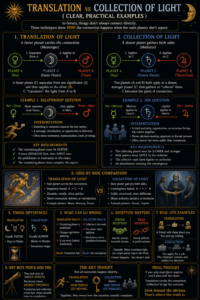

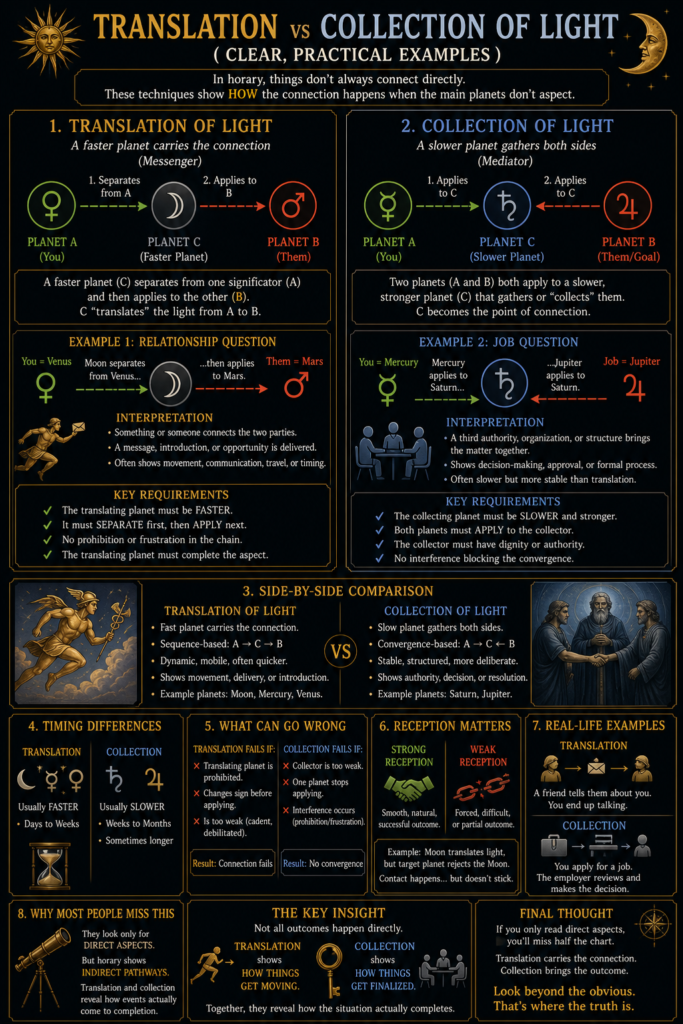
Why These Two Techniques Matter
In horary, things don’t always connect directly.
- The main significators don’t aspect
- The timing looks unclear
- The situation feels “possible”… but not obvious
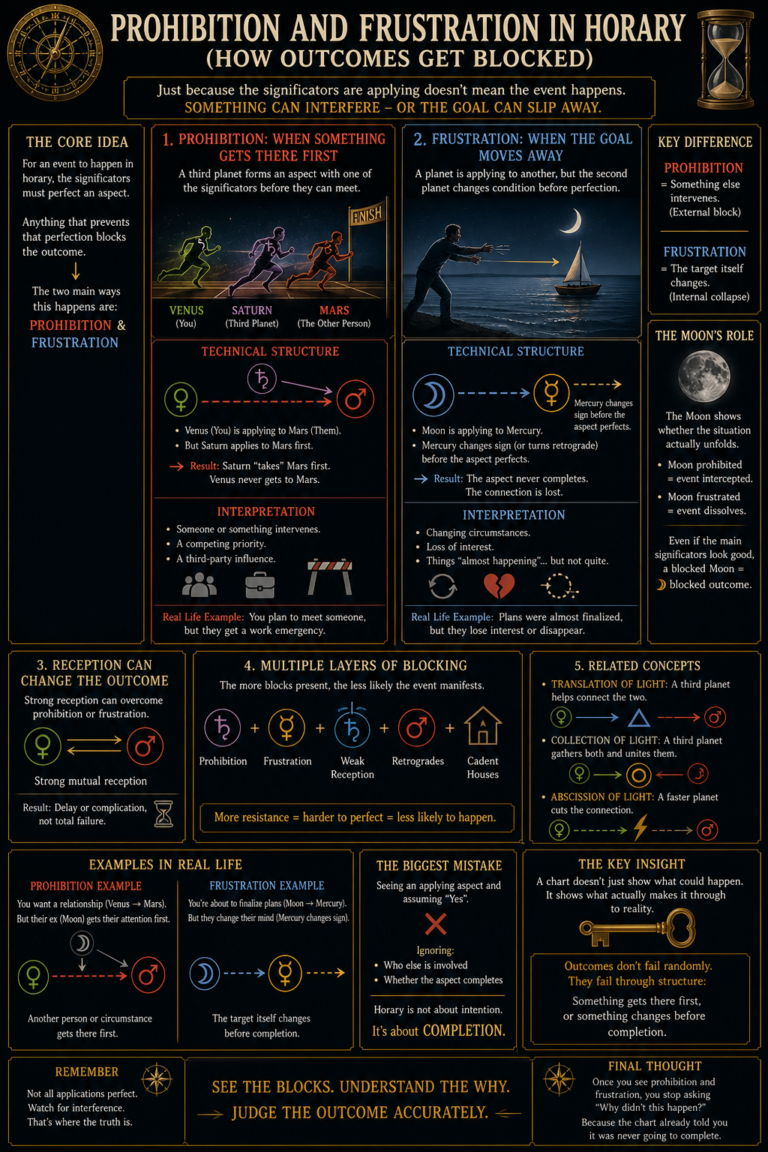
This is where two of the most important bridging techniques come in:
Translation of Light
Collection of Light
Both answer the same question:
→ How does something happen when the main planets don’t connect directly?
The Core Difference (Simple)
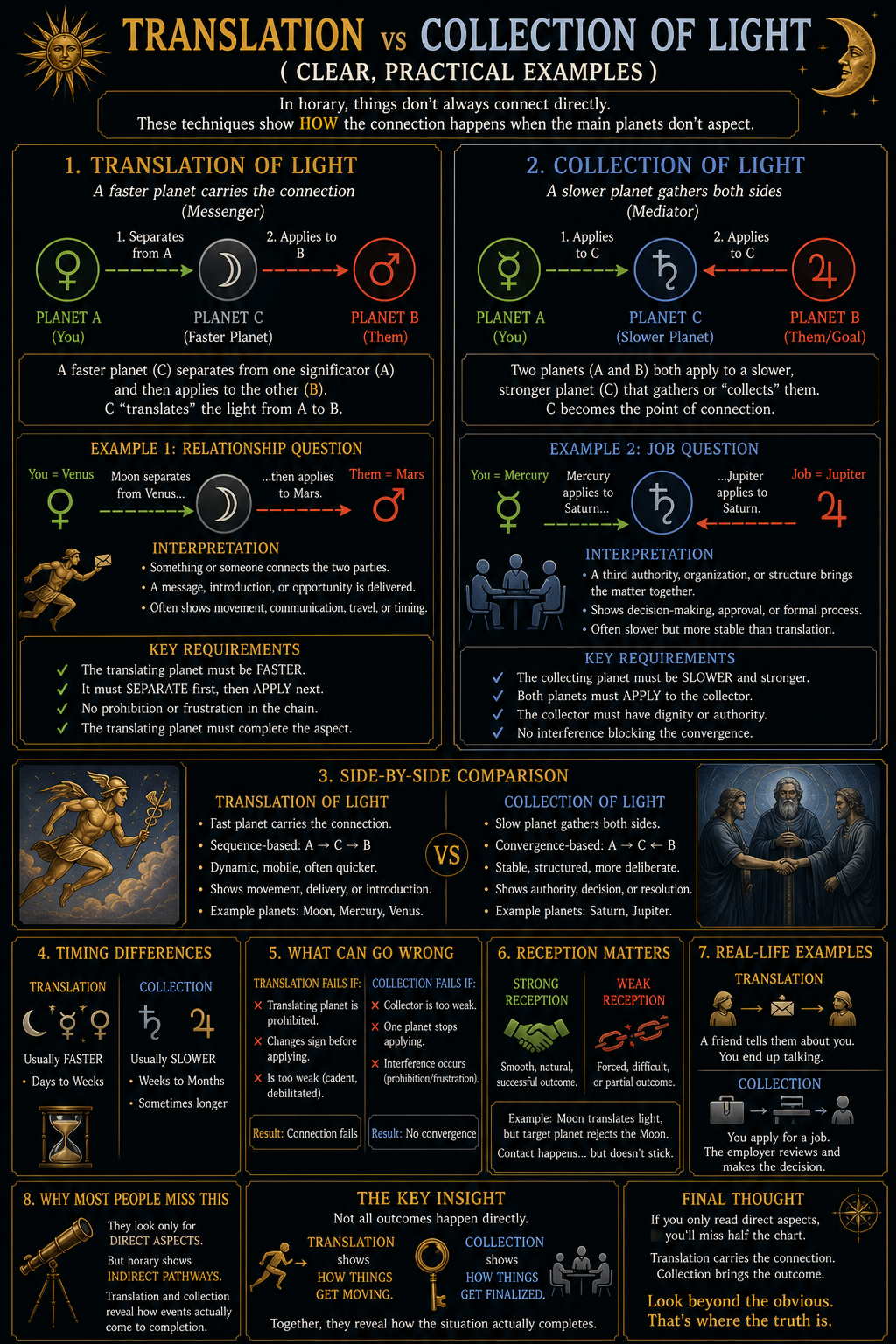
- Translation of Light → A faster planet carries the connection
- Collection of Light → A slower planet gathers both sides
Think of it as:
- Translation = messenger
- Collection = mediator
1. Translation of Light


Definition
Translation happens when:
A faster planet separates from one significator and then applies to another.
Technical Structure
- Planet A (you)
- Planet B (them)
- Planet C (faster planet)
Sequence:
- C separates from A
- C applies to B
Result:
→ C “translates” the light from A to B
Example 1 (Relationship Question)
- You = Venus
- Them = Mars
- No direct aspect between Venus and Mars
BUT:
- Moon (fast planet) separates from Venus
- Then applies to Mars
→ Translation of Light
Interpretation
This shows:
- Something connects the two parties
- Even without direct interaction
In real life:
- A mutual friend introduces you
- A message gets passed along
- A situation brings you together
Key Requirements
For valid translation:
- The translating planet must be faster
- It must separate first, then apply next
- No interference blocking the chain
2. Collection of Light
Definition
Collection happens when:
Two planets both apply to a slower, stronger planet that gathers them.
Technical Structure
- Planet A (you)
- Planet B (them)
- Planet C (slower planet)
Sequence:
- A applies to C
- B applies to C
Result:
→ C “collects” both A and B
Example 2 (Job Question)
- You = Mercury
- Job = Jupiter
- No direct aspect
BUT:
- Mercury applies to Saturn
- Jupiter applies to Saturn
→ Collection of Light
Interpretation
This shows:
- A third authority or structure brings things together
In real life:
- A boss makes the decision
- A system processes both sides
- An external structure finalizes the outcome
Key Requirements
For valid collection:
- The collecting planet must be slower and stronger
- Both planets must apply to it
- The collector must have enough dignity or authority
3. Side-by-Side Comparison
Translation of Light
- Fast planet carries the connection
- Sequence-based (A → C → B)
- Often quick and dynamic
- Feels like movement or delivery
Collection of Light
- Slow planet gathers both
- Convergence-based (A → C ← B)
- More stable and structured
- Feels like decision or resolution
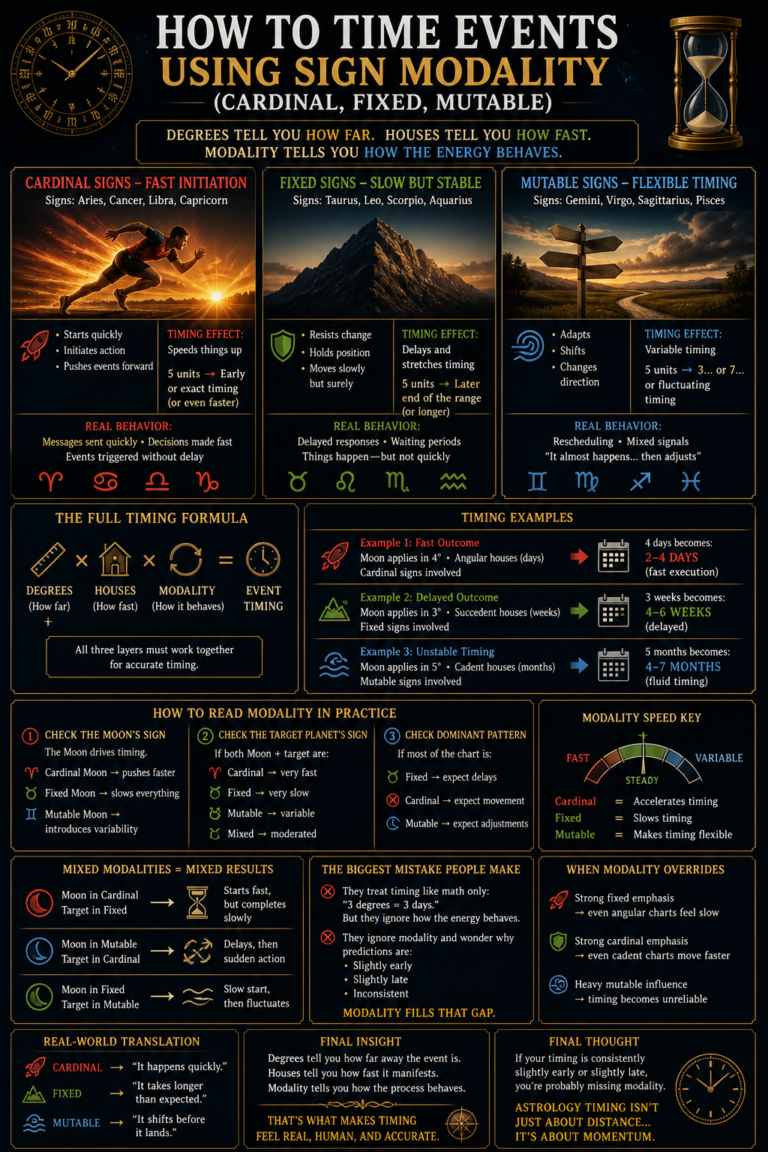
4. Timing Differences
Translation:
→ Usually faster outcomes
→ Driven by Moon, Mercury, Venus
Collection:
→ Slower outcomes
→ Driven by Saturn, Jupiter
5. What Can Go Wrong
Translation Failure
- Translating planet gets prohibited
- Changes sign before applying
- Is too weak (cadent, debilitated)
→ Result: connection fails
Collection Failure
- Collector is too weak
- One planet stops applying
- Interference occurs
→ Result: no convergence
6. Reception Changes Everything
Even if translation or collection exists:
- Strong reception → smooth outcome
- Weak reception → forced or partial outcome
Example:
- Moon translates light
- But target planet rejects the Moon
→ Contact happens… but doesn’t stick
7. Real-World Translation vs Collection
Translation Scenario
- You like someone
- A friend mentions you to them
- You end up talking
→ The friend = translating planet
Collection Scenario
- You apply for a job
- Employer reviews candidates
- Decision is made
→ Employer = collecting planet
8. Why Most People Miss This
They look only for:
→ Direct aspects
And conclude:
→ “No connection = no outcome”
But horary is more sophisticated:
→ It shows indirect pathways
The Key Insight
Not all outcomes happen directly.
Some happen because:
- Something carries the connection
- Or something brings both sides together
Final Thought
If you only read:
→ Direct aspects
You’ll miss half the chart.
Because in horary:
- Translation shows how things get moving
- Collection shows how things get finalized
And together, they reveal:
→ How the situation actually completes.