

When Shiva Saved Creation
Among the many stories of Lord Shiva, few are as beloved as the tale of how he became known as Neelkanth, the Blue-Throated One.
The story begins during a time when both the gods and demons sought immortality. Hidden within the cosmic ocean was a divine nectar known as Amrita, capable of granting eternal life. To obtain it, the gods and demons agreed to work together and churn the vast Ocean of Milk.
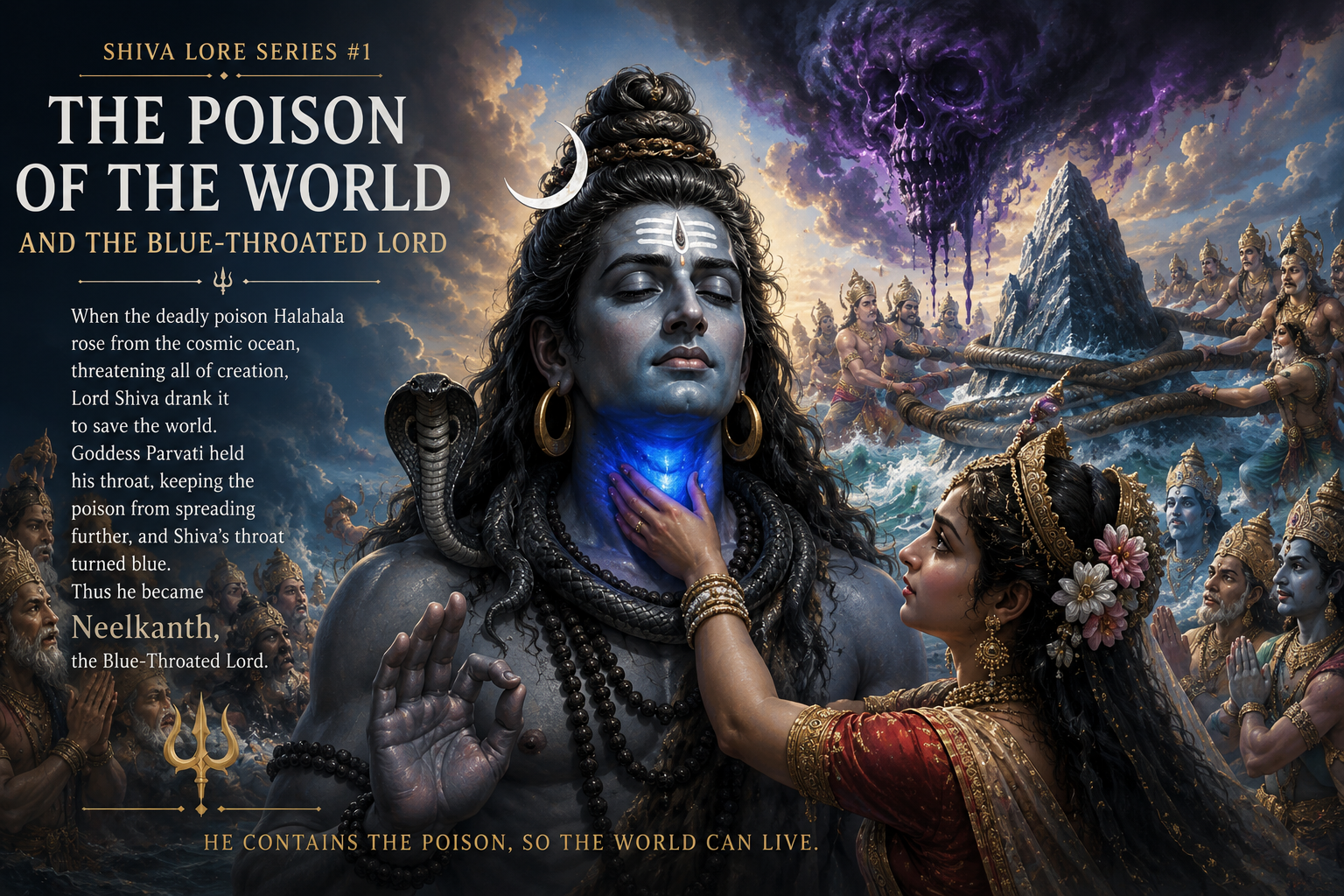
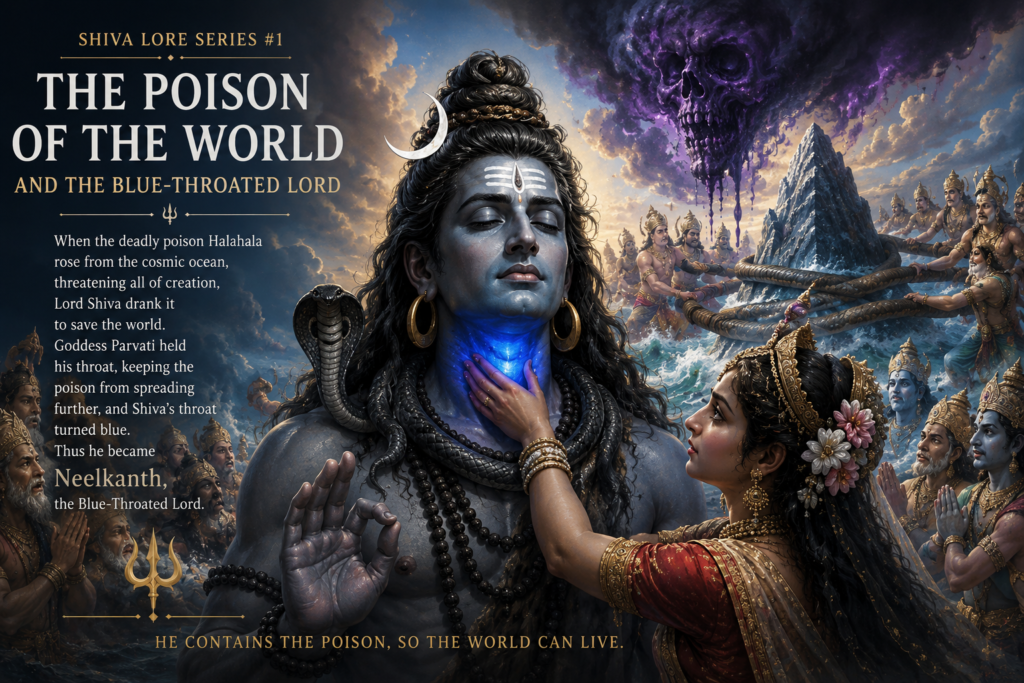
Using a sacred mountain as a churning rod and a giant serpent as a rope, they began the tremendous task.
But before the nectar could emerge, something unexpected happened.
From the depths of the ocean arose a deadly poison known as Halahala.
The poison was so powerful that its fumes threatened to destroy the heavens, the earth, and every living being. Gods fled in panic. Demons recoiled in fear. Even the great celestial beings could not approach it.
As the poison spread across creation, all hope seemed lost.
The gods then turned to Lord Shiva.
Unlike the other deities, Shiva lived beyond worldly concerns. He meditated in the mountains, detached from power, wealth, and status. Yet when the suffering of creation reached him, he did not turn away.
Without hesitation, Shiva gathered the poison into his hands and drank it.
The gods watched in horror.
The poison was powerful enough to annihilate entire worlds. If it reached Shiva’s heart, even he might be harmed.
At that moment, Shiva’s consort, Goddess Parvati, acted swiftly. She placed her hand around his throat, preventing the poison from traveling further into his body.
The poison remained trapped in his neck.
Its immense power turned Shiva’s throat a deep blue color.
From that day forward, he became known as Neelkanth, the Blue-Throated Lord.
The Spiritual Meaning
While the story is mythological, its symbolism remains deeply relevant today.
Every person encounters forms of poison in life.
Not necessarily physical poison, but emotional poison:
- Anger
- Jealousy
- Fear
- Hatred
- Resentment
- Anxiety
Most people either suppress these emotions or allow them to spread into the world through harmful actions.
Shiva demonstrates a third path.
He neither rejects the poison nor allows it to control him.
He contains it.
The poison remains present, but it does not reach his heart.
In this way, Shiva represents mastery over destructive forces rather than their denial.
Lessons for Modern Seekers
The story of Neelkanth teaches several timeless lessons:
Compassion Requires Strength
Shiva accepted suffering so others would not have to.
True compassion is often uncomfortable and requires courage.
Spiritual Growth Is Not Escaping Darkness
Many people imagine spirituality as avoiding difficult emotions.
Shiva teaches the opposite.
Growth comes from confronting darkness without becoming consumed by it.
Not Every Burden Must Be Passed On
When hurt, many people spread their pain to others.
Shiva shows that wisdom sometimes means transforming pain rather than transmitting it.
The Strongest Person Is Not Always the Loudest
Shiva does not seek recognition or praise.
He acts because it is necessary.
His power comes from inner stillness rather than outward dominance.
Why This Story Endures
Thousands of years after it was first told, the story of Neelkanth remains one of the most powerful symbols in Hindu spirituality.
It reminds us that the greatest spiritual strength is not found in conquering others.
It is found in the ability to face the poison of life, hold it without fear, and prevent it from poisoning the world around us.
In times of conflict, uncertainty, and emotional turmoil, the Blue-Throated Lord continues to offer a timeless lesson:
You may not be able to stop every poison from appearing in life.
But you can choose what happens to it once it reaches you.