

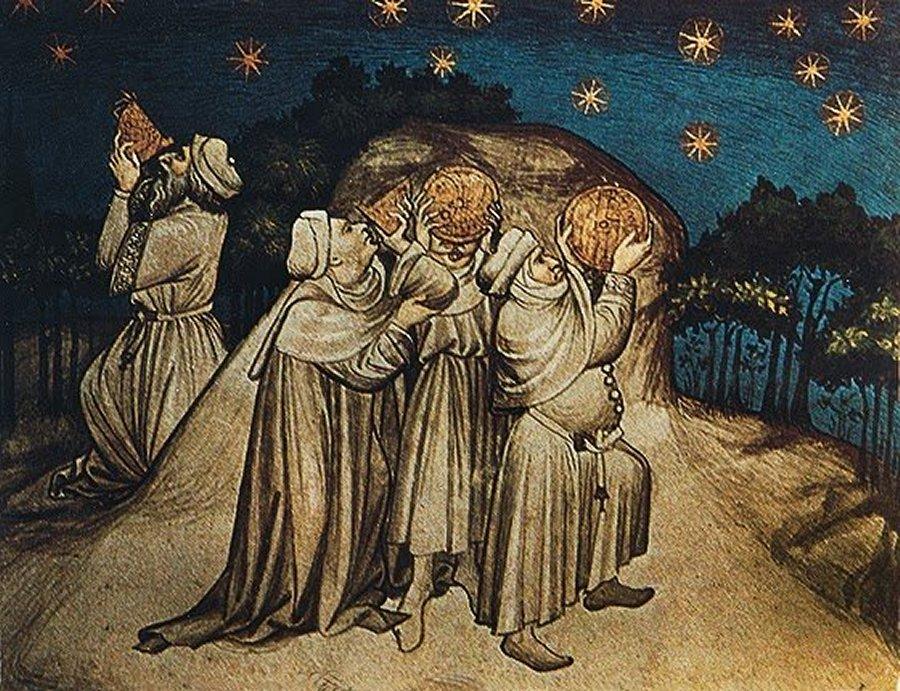
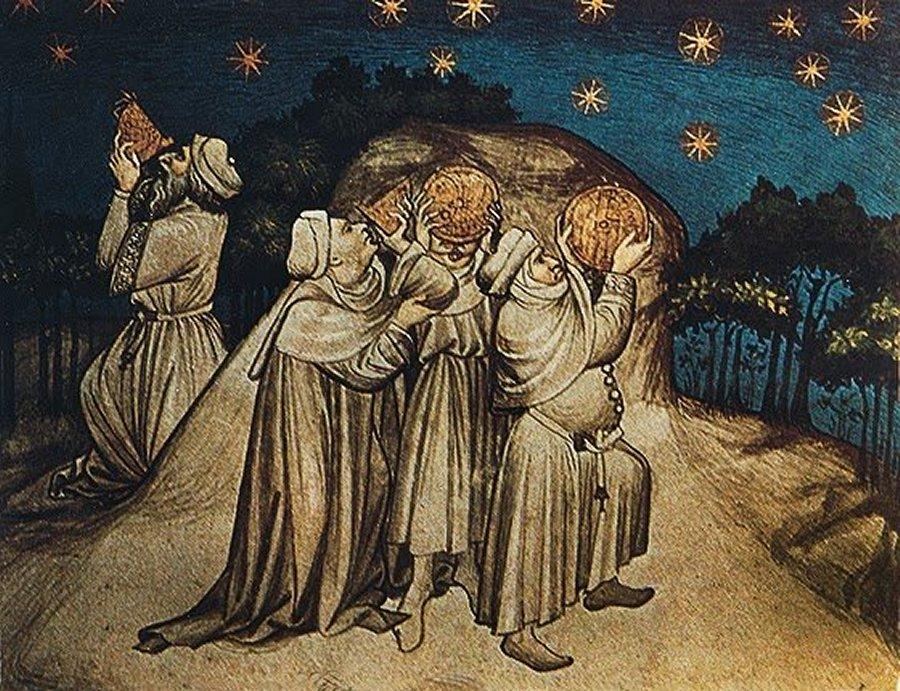
Long before astrology was used to interpret personality, relationships, and destiny, it served a far more practical purpose: predicting the weather. In ancient civilizations, observing the heavens was essential for survival. Farmers, sailors, and rulers relied on celestial patterns to anticipate seasonal changes, floods, droughts, and storms. These early observations formed the backbone of astrology as we know it today.
In many ways, astrology began as the world’s first scientific attempt to understand the environment. By correlating celestial movements with earthly events—especially weather—ancient scholars created symbolic systems that eventually evolved into modern astrological traditions.
Astrology’s Origins in Weather Prediction
The earliest known astrologers were also astronomers and meteorologists. Civilizations such as the Babylonians, Egyptians, Greeks, and Chinese closely observed the sky, believing that cosmic events mirrored earthly occurrences. Their records reveal a strong connection between celestial phenomena and atmospheric conditions.
Babylonian Beginnings
Ancient Mesopotamia, often regarded as the cradle of astrology, produced detailed celestial records as early as the second millennium BCE. Babylonian priests compiled omen texts such as the Enuma Anu Enlil, which linked planetary movements and eclipses with terrestrial events—including storms, floods, and droughts.
These early astrologers were less concerned with individual destinies and more focused on predicting environmental conditions that affected agriculture and empire stability.
The Zodiac and Seasonal Cycles
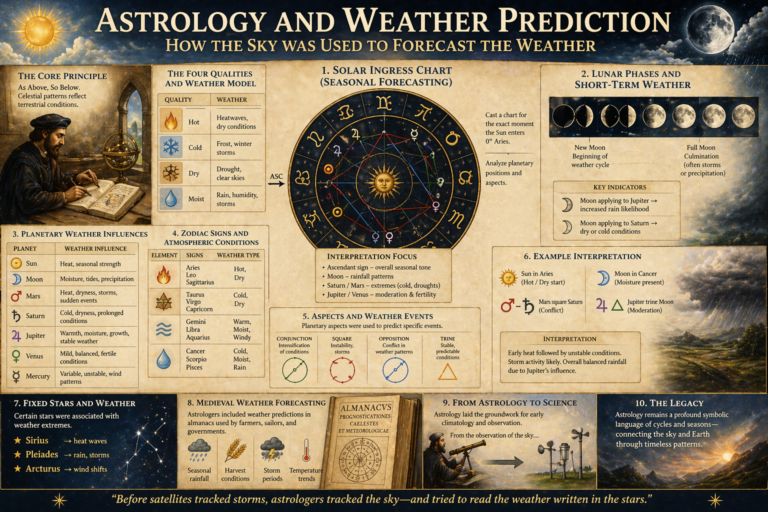
The twelve signs of the zodiac emerged from careful observations of the Sun’s annual journey through the constellations. Each sign corresponded to a specific season, and over time, astrologers associated them with environmental qualities such as heat, cold, dryness, and moisture.
These observations laid the groundwork for the elemental system of astrology.
The Four Classical Elements
| Element | Qualities | Zodiac Signs |
|---|---|---|
| Fire | Hot and dry | Aries, Leo, Sagittarius |
| Earth | Cold and dry | Taurus, Virgo, Capricorn |
| Air | Hot and moist | Gemini, Libra, Aquarius |
| Water | Cold and moist | Cancer, Scorpio, Pisces |
This framework reflects ancient attempts to explain weather patterns and seasonal shifts.
Cancer and the “Moist” Nature of the Zodiac
One of the clearest examples of astrology’s meteorological origins is the sign of Cancer. Traditionally described as cold and moist, Cancer corresponds with the beginning of summer in the Northern Hemisphere—marked by increased humidity, rainfall, and the life-giving properties of water.
Why Cancer Was Considered Moist
- Seasonal Alignment: Cancer begins at the Summer Solstice, a time historically associated with heat, humidity, and storms in many regions.
- Agricultural Observations: Early societies noted that this period was critical for crop growth due to abundant moisture.
- Symbolism of Fertility: Water sign associations reflected the nurturing and life-sustaining qualities of seasonal rains.
- Ancient Verification: Repeated observation of weather patterns reinforced these elemental attributions over centuries.
Although astrology is symbolic rather than empirical by modern scientific standards, these correlations were based on real environmental observations that were meaningful and practical for ancient societies.
Greek Contributions: Aristotle and Ptolemy
Greek philosophers further formalized the connection between celestial patterns and weather.
Aristotle’s Meteorologica
In the 4th century BCE, Aristotle explored atmospheric phenomena such as winds, storms, and precipitation, linking them to cosmic influences. His work influenced both early science and astrology, bridging natural philosophy and celestial observation.
Ptolemy’s Tetrabiblos
Claudius Ptolemy, one of history’s most influential astrologers, described how planetary alignments affected climate and seasonal conditions. He codified the elemental qualities of the zodiac—hot, cold, moist, and dry—which remain foundational in astrological interpretation today.
Astrology as Proto-Science
Before modern meteorology, astrology provided a systematic way to understand and predict environmental changes. It served as an early scientific discipline, combining observation, mathematics, and pattern recognition.
Practical Applications in Antiquity
- Agriculture: Determining the best times for planting and harvesting.
- Navigation: Guiding sailors through seasonal weather patterns.
- Governance: Advising rulers on floods, droughts, and natural disasters.
- Calendrical Systems: Establishing seasonal cycles for religious and civic life.
In this sense, astrology was not merely mystical—it was essential for survival and societal organization.
From Weather Forecasting to Personal Astrology
As civilizations advanced, astrology gradually evolved from predicting environmental conditions to interpreting human behavior and destiny. The symbolic associations derived from weather patterns became psychological archetypes.
For example:
- Water Signs: Associated with emotion, intuition, and nurturing qualities.
- Fire Signs: Linked to vitality, passion, and energy.
- Earth Signs: Connected to stability, practicality, and productivity.
- Air Signs: Related to intellect, communication, and movement.
Thus, what began as observational meteorology transformed into a sophisticated symbolic language for understanding human experience.
The Legacy of Astrometeorology
Even today, a specialized branch known as astrometeorology continues to explore potential correlations between celestial cycles and atmospheric phenomena. While modern science relies on empirical data and technological advancements, astrology’s historical role highlights humanity’s enduring desire to interpret nature through cosmic patterns.
Though contemporary meteorology has replaced astrology as a predictive science, astrology’s symbolic framework remains culturally and spiritually influential.
Final Thoughts
Weather prediction was among the earliest functions of astrology, providing ancient societies with practical guidance based on celestial observation. The elemental qualities assigned to the zodiac—such as Cancer’s moist nature—were rooted in real seasonal patterns and empirical experience.
These early correlations formed the philosophical and symbolic foundation of astrology, transforming it from a survival tool into a system for understanding both the cosmos and the human condition.
While modern science has refined our ability to forecast the weather, astrology endures as a poetic reflection of humanity’s timeless relationship with the stars. It reminds us that our ancestors looked to the heavens not only for meaning—but also for rain, harvests, and the promise of life itself.