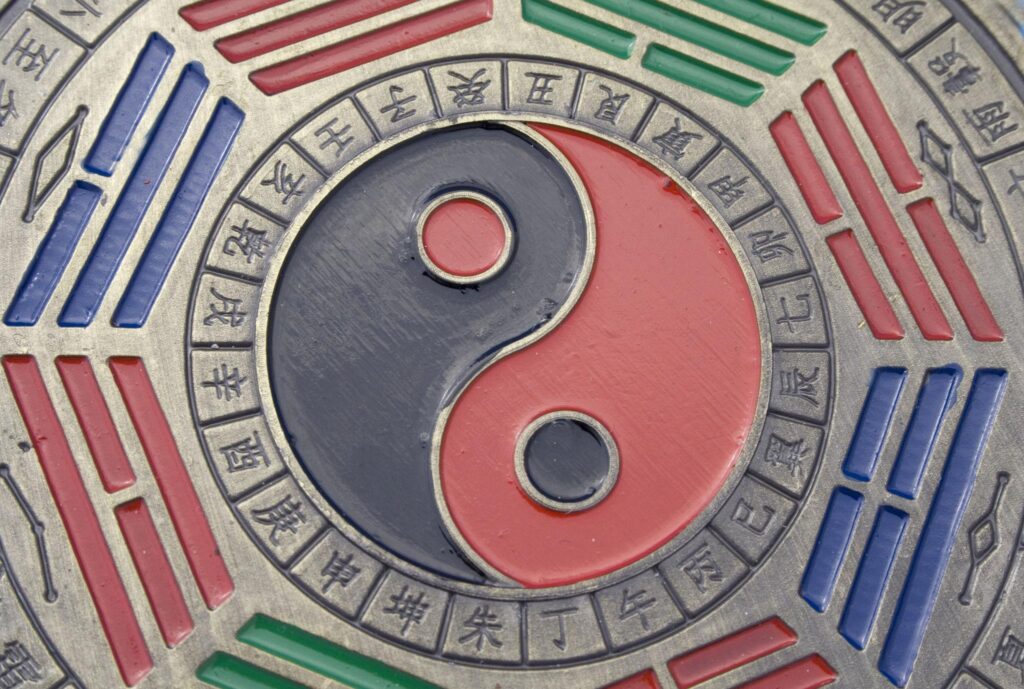
For thousands of years, Chinese metaphysical traditions have sought to uncover the hidden patterns governing the universe. Among the most revered of these systems are I Ching and Chinese Astrology. Rooted in the same philosophical foundations, both disciplines interpret the rhythms of nature through symbolic cycles, offering profound insights into destiny, harmony, and cosmic order.
To understand the depth of Chinese astrology, one must first explore the origins and wisdom of the I Ching—often regarded as one of the oldest and most influential texts in human history.
What Is the I Ching?
The I Ching, or Book of Changes, is an ancient Chinese divination text dating back over 3,000 years. It is considered one of the Five Classics of Confucianism and remains a cornerstone of Chinese philosophy, spirituality, and cosmology.
Originally used for guidance in governance, warfare, and personal decision-making, the I Ching provides wisdom through a system of symbolic patterns known as hexagrams. Each hexagram reflects the ever-changing nature of reality and offers insight into life’s cycles.
Core Principles of the I Ching
- Change as the Fundamental Law of the Universe
- Balance Between Opposing Forces
- Harmony with Natural Cycles
- Alignment with Cosmic Order
- Wisdom Through Symbolism and Reflection
Rather than predicting fixed outcomes, the I Ching encourages individuals to align themselves with the flow of change.
The Structure of the I Ching
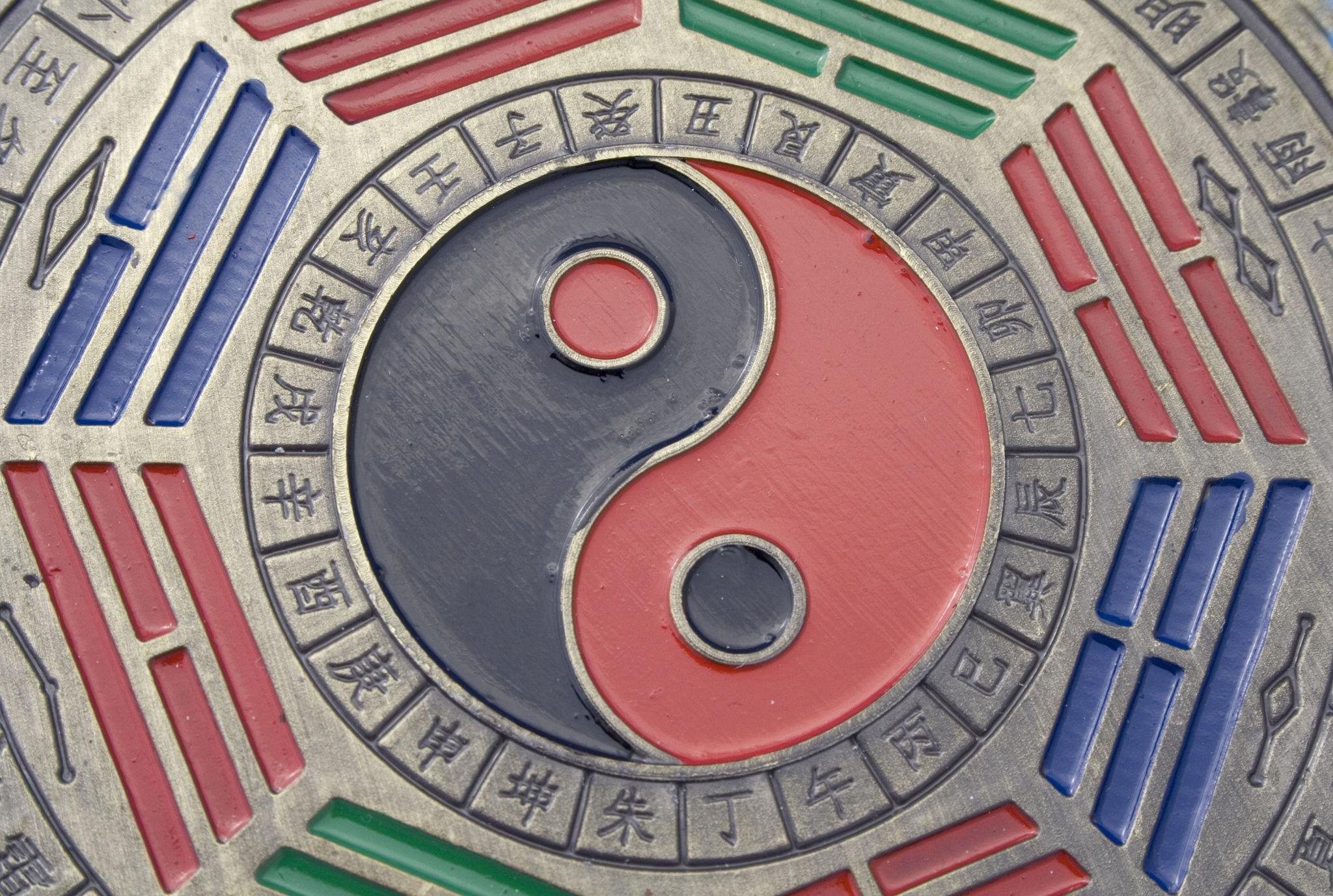
The I Ching is composed of 64 hexagrams, each made up of six lines. These lines are either:
- Yang (Solid Line): Representing activity, strength, and expansion
- Yin (Broken Line): Representing receptivity, softness, and contraction
These combinations arise from eight fundamental trigrams, which symbolize natural forces such as heaven, earth, fire, and water.
The Eight Trigrams (Bagua)
| Trigram | Meaning | Element |
|---|---|---|
| Qian | Heaven | Sky |
| Kun | Earth | Earth |
| Zhen | Thunder | Wood |
| Xun | Wind | Wood |
| Kan | Water | Water |
| Li | Fire | Fire |
| Gen | Mountain | Earth |
| Dui | Lake | Metal |
These trigrams form the philosophical and symbolic foundation of many Chinese metaphysical systems, including Feng Shui, Taoism, and Chinese astrology.
The Historical Origins of the I Ching
The origins of the I Ching are traditionally attributed to legendary Chinese figures:
- Fu Xi (c. 2800 BCE): Credited with discovering the trigrams by observing natural patterns.
- King Wen of Zhou (c. 1100 BCE): Organized the 64 hexagrams.
- Duke of Zhou: Authored interpretive commentaries.
- Confucius (551–479 BCE): Expanded its philosophical significance through scholarly writings.
Through these contributions, the I Ching evolved from an oracle into a profound guide to ethics, governance, and cosmic understanding.
The Philosophical Foundations Shared with Chinese Astrology
Chinese astrology and the I Ching are deeply intertwined through their shared philosophical roots. Both systems are grounded in:
1. Yin and Yang
The dynamic interplay between opposites forms the basis of both traditions.
- Yin: Passive, receptive, feminine, and nurturing.
- Yang: Active, assertive, masculine, and expansive.
Chinese astrology uses this duality to describe zodiac animals and elemental influences, mirroring the binary structure of the I Ching’s hexagrams.
2. The Five Elements (Wu Xing)
Both systems rely on the Five Elements to interpret the cycles of life:
| Element | Meaning |
|---|---|
| Wood | Growth and expansion |
| Fire | Passion and transformation |
| Earth | Stability and balance |
| Metal | Discipline and structure |
| Water | Wisdom and adaptability |
In Chinese astrology, these elements combine with zodiac animals to create personality archetypes and generational cycles. In the I Ching, they symbolize natural forces and transformative processes.
3. Cyclical Time and Cosmic Order
The I Ching emphasizes constant transformation, a concept mirrored in Chinese astrology’s repeating cycles, such as:
- The 12-year zodiac cycle
- The 10 Heavenly Stems
- The 12 Earthly Branches
- The 60-year sexagenary cycle
Both systems view time as cyclical rather than linear, reflecting the rhythmic patterns of the cosmos.
How the I Ching Influenced Chinese Astrology
1. Establishing the Concept of Cosmic Patterns
The I Ching introduced the idea that the universe operates through symbolic patterns. Chinese astrology adopted this worldview, interpreting celestial cycles as reflections of earthly events.
2. Providing the Yin-Yang Framework
The fundamental duality of Yin and Yang, central to the I Ching, became the philosophical backbone of Chinese astrology. Zodiac signs and elemental interactions are interpreted through this dynamic balance.
3. Inspiring the Sexagenary Cycle
The 60-year cycle in Chinese astrology mirrors the combinatory logic of the I Ching’s hexagrams, demonstrating the integration of symbolic mathematics and cosmology.
4. Influencing the Five Elements Theory
While the Five Elements evolved independently, their philosophical application was refined through the same cosmological traditions that shaped the I Ching.
5. Shaping Divination and Prediction
The I Ching’s approach to interpreting change influenced Chinese astrological practices used to determine:
- Auspicious dates
- Marriage compatibility
- Career decisions
- Agricultural planning
- Political strategies
Both systems serve as tools for aligning human actions with cosmic rhythms.
Key Differences Between the I Ching and Chinese Astrology
| Aspect | I Ching | Chinese Astrology |
|---|---|---|
| Primary Function | Divination and philosophical guidance | Personality analysis and destiny forecasting |
| Core Structure | 64 Hexagrams | 12 Zodiac Animals and Five Elements |
| Time Orientation | Moment-based interpretation | Birth-based and cyclical |
| Philosophical Basis | Taoist cosmology | Yin-Yang and Five Elements theory |
| Purpose | Understanding change | Understanding destiny and cycles |
Despite these differences, both systems complement each other and share a common cosmological heritage.
The Lasting Legacy of the I Ching
The influence of the I Ching extends beyond Chinese astrology into numerous disciplines, including:
- Feng Shui
- Traditional Chinese Medicine
- Taoist philosophy
- Confucian ethics
- Martial arts
- Eastern metaphysics
Its wisdom has also inspired Western thinkers, psychologists, and scientists, including Carl Jung, who explored its concept of synchronicity.
Modern Relevance
Today, practitioners often combine the I Ching with Chinese astrology to gain a more comprehensive understanding of life’s cycles. While astrology offers insight into long-term destiny, the I Ching provides guidance for navigating present circumstances.
Together, they form a holistic system that integrates timing, philosophy, and spiritual wisdom.
Final Thoughts
The I Ching stands as one of the foundational pillars of Chinese metaphysics, profoundly shaping the development of Chinese astrology. Through its teachings on Yin and Yang, the Five Elements, and the nature of change, it established the philosophical framework that underpins astrological interpretation in Chinese culture.
While Chinese astrology maps the cycles of time and destiny, the I Ching reveals the deeper wisdom behind transformation. Together, they offer a timeless guide to understanding both the universe and our place within it.
In essence, if Chinese astrology charts the heavens, the I Ching interprets the rhythm of change that moves them.