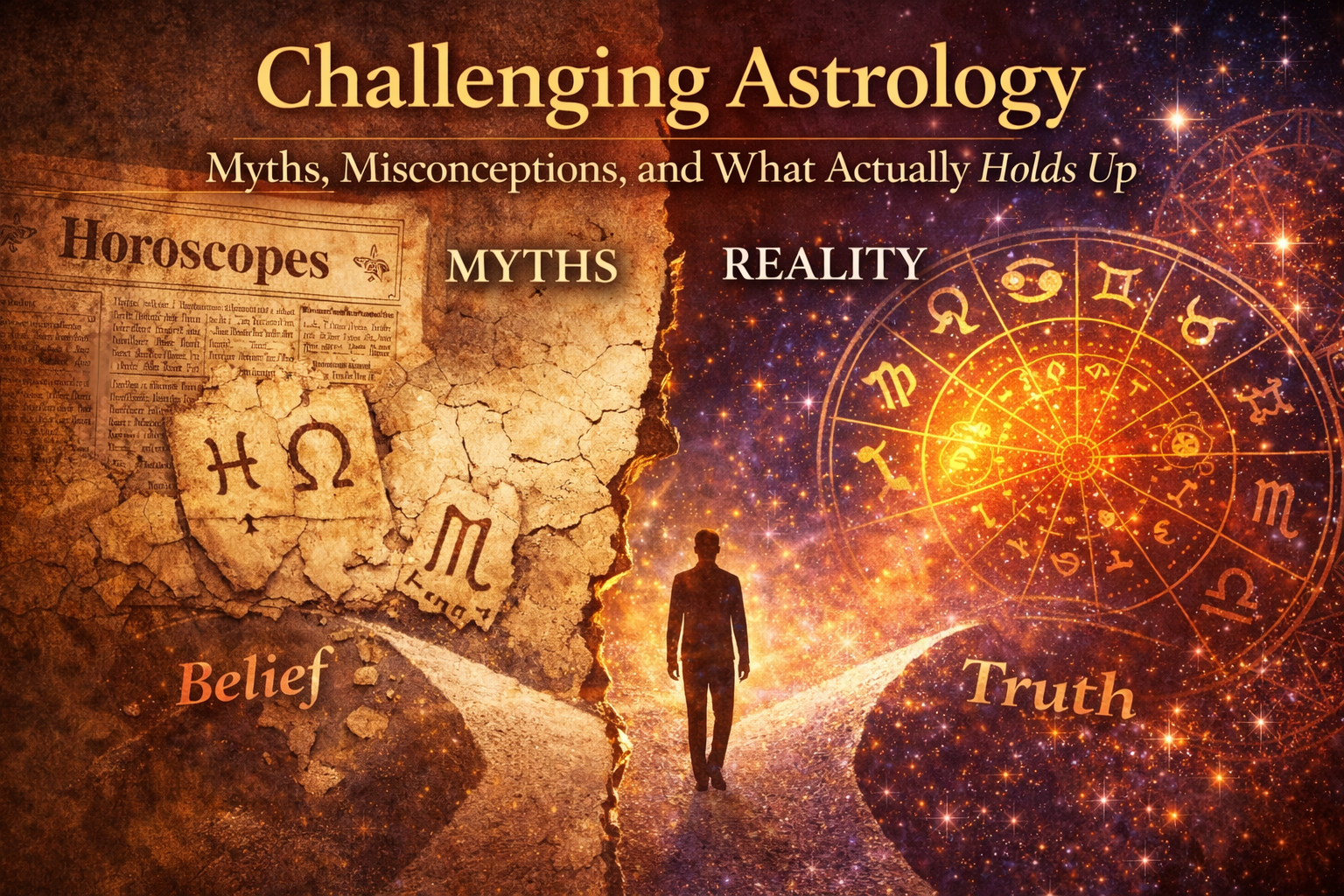
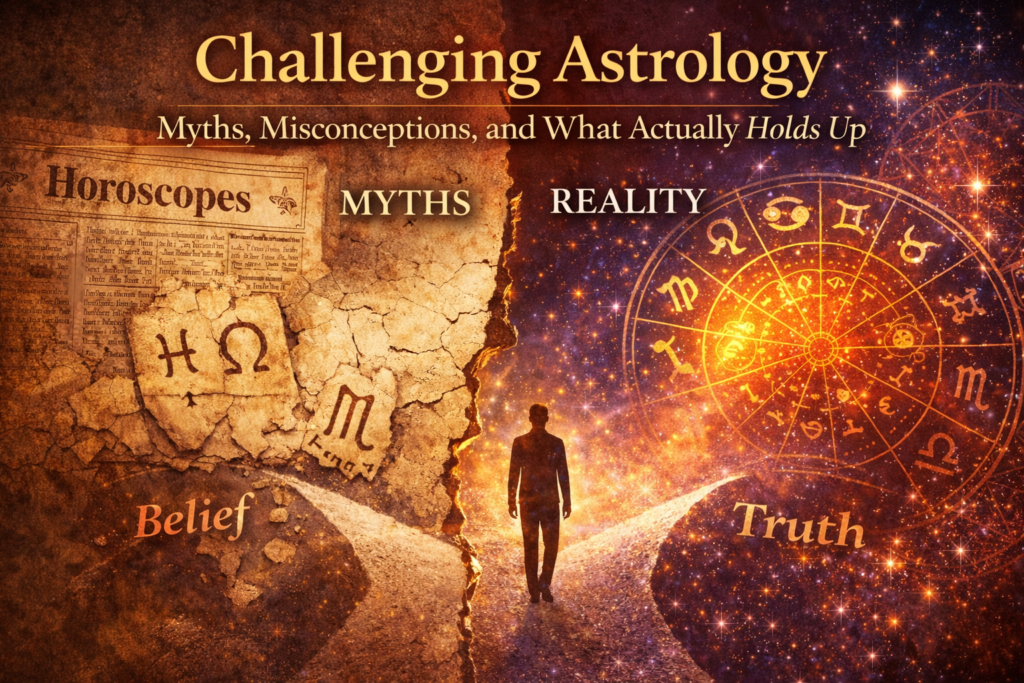
Astrology has experienced a massive resurgence in recent years. From social media memes to dating filters, it has become part of everyday language. But with popularity often comes oversimplification—and sometimes, misunderstanding.
If astrology is to be taken seriously as a symbolic or interpretive system, it must also be open to critique. Not every widely accepted belief holds up under deeper examination.
This article explores some of the most common assumptions people make about astrology—and why they deserve a second look.
1. “Your Sun Sign Defines Who You Are”
This is arguably the most widespread misconception in modern astrology.
The Reality
Your Sun sign represents:
- Core identity
- Ego expression
- Life direction
But it is only one part of a much larger system.
A full natal chart includes:
- Moon (emotions)
- Ascendant (outer personality)
- Mercury (thinking)
- Venus (relationships)
- Mars (drive)
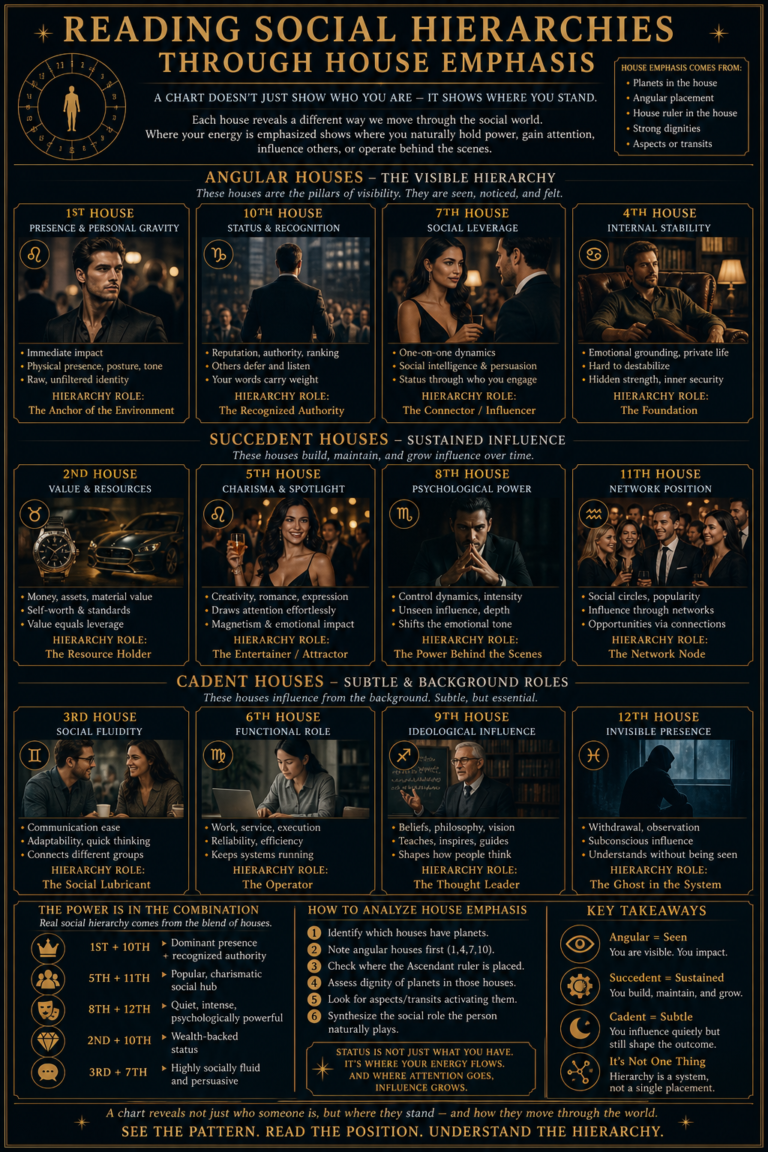
- Houses (life areas)
- Aspects (planet interactions)
Why This Belief Persists
Convenience. Sun signs are easy:
- No birth time needed
- Easy to categorize
- Easy to market
The Problem
Reducing a person to a Sun sign is like judging a movie from one frame.
2. “Astrology Predicts Exact Events”
Many people believe astrology can tell you exactly what will happen and when.
The Reality
Astrology indicates:
- Tendencies
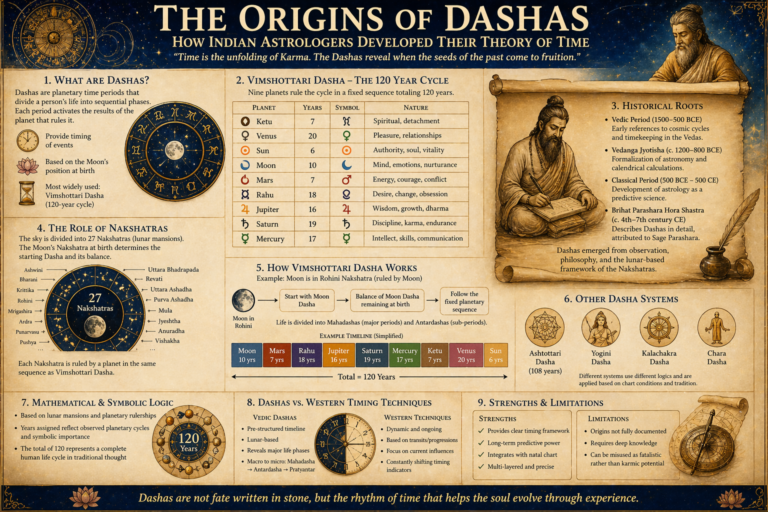
- Timing windows
- Psychological states
- Potential outcomes
It does not guarantee specific events.
For example:
- A “love transit” could mean meeting someone—or deepening an existing relationship
- A “career transit” could mean a promotion—or a shift in direction
The Problem
When people expect certainty, they:
- Misinterpret astrology
- Lose trust when predictions don’t materialize
- Treat astrology as deterministic rather than symbolic
3. “Mercury Retrograde Ruins Everything”
Mercury retrograde has become a cultural scapegoat.
The Reality
Mercury retrograde is associated with:
- Miscommunication
- Delays
- Revisions
- Reflection
But it is not inherently negative.
What Actually Happens
- It slows things down
- It exposes inefficiencies
- It forces reassessment
The Problem
Blaming everything on Mercury retrograde:
- Removes personal accountability
- Oversimplifies complex situations
- Turns astrology into superstition
4. “Certain Signs Are Inherently Bad”
You’ve likely heard:
- “Scorpios are toxic”
- “Geminis are fake”
- “Virgos are too critical”
The Reality
No sign is inherently good or bad.
Each sign has:
- High expression (evolved traits)
- Low expression (unbalanced traits)
For example:
- Scorpio → depth or control
- Gemini → adaptability or inconsistency
- Virgo → precision or perfectionism
The Problem
This belief:
- Reduces complex archetypes to stereotypes
- Encourages bias in dating and relationships
- Undermines astrology’s depth
5. “Compatibility Is Determined by Zodiac Signs”
“Water signs match with water signs.”
“Fire signs should date fire signs.”
Sounds simple—but reality is far more nuanced.
The Reality
Compatibility depends on:
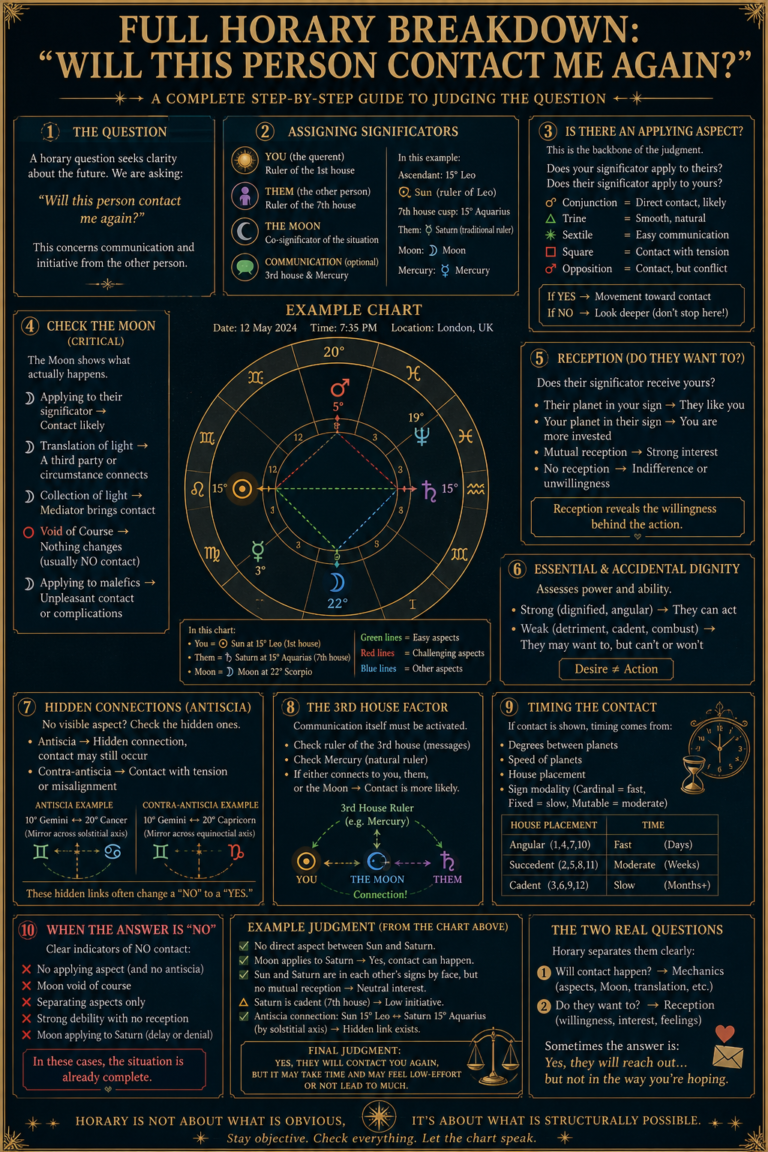
- Full chart interactions (synastry)
- Emotional alignment (Moon)
- Communication (Mercury)
- Attraction (Venus & Mars)
- Life timing
Two “incompatible” signs can have incredible chemistry—and vice versa.
The Problem
Relying on Sun sign compatibility:
- Leads to missed connections
- Creates false expectations
- Oversimplifies relationship dynamics
6. “Astrology Removes Free Will”
A common criticism is that astrology implies everything is predetermined.
The Reality
Astrology describes:
- Patterns
- Tendencies
- Cycles
But it does not dictate your choices.
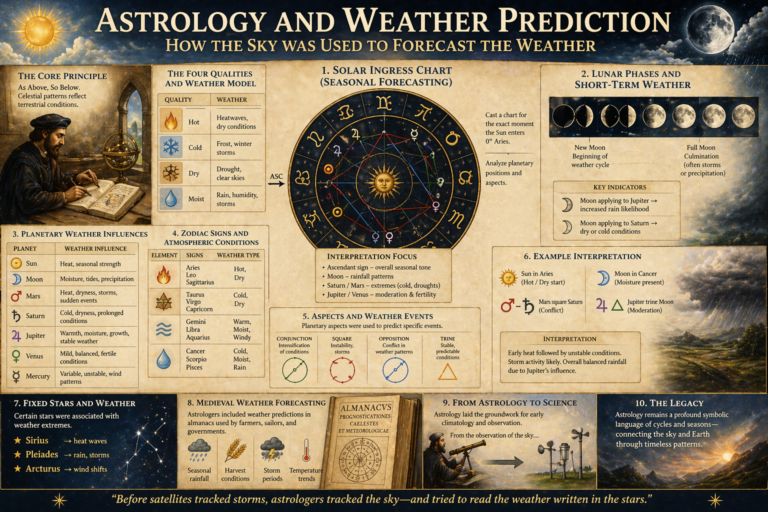
Think of it like weather:
- A storm forecast doesn’t force you outside
- It just tells you what conditions to expect
The Problem
Believing astrology removes free will:
- Leads to passivity
- Encourages fatalism
- Misrepresents astrology’s purpose
7. “All Astrologers Agree”
There’s an assumption that astrology is a unified system.
The Reality
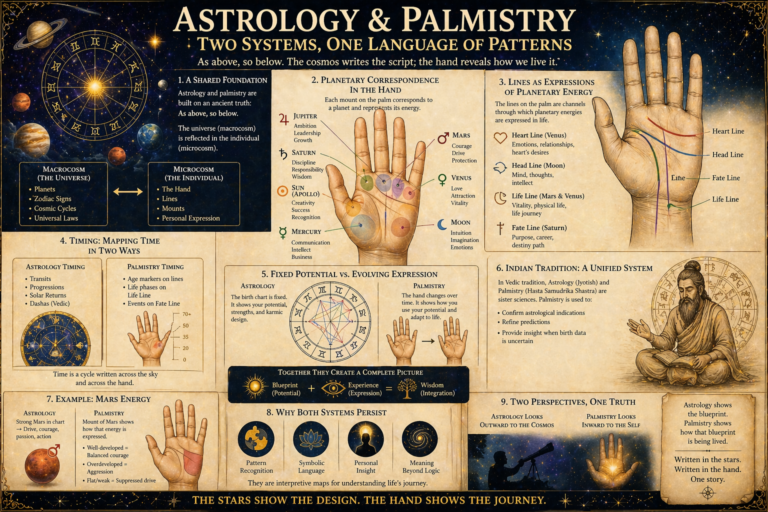
Astrology has multiple traditions:
- Western astrology
- Vedic Astrology
- Chinese Astrology
- Hellenistic astrology
- Modern psychological astrology
Even within one system:
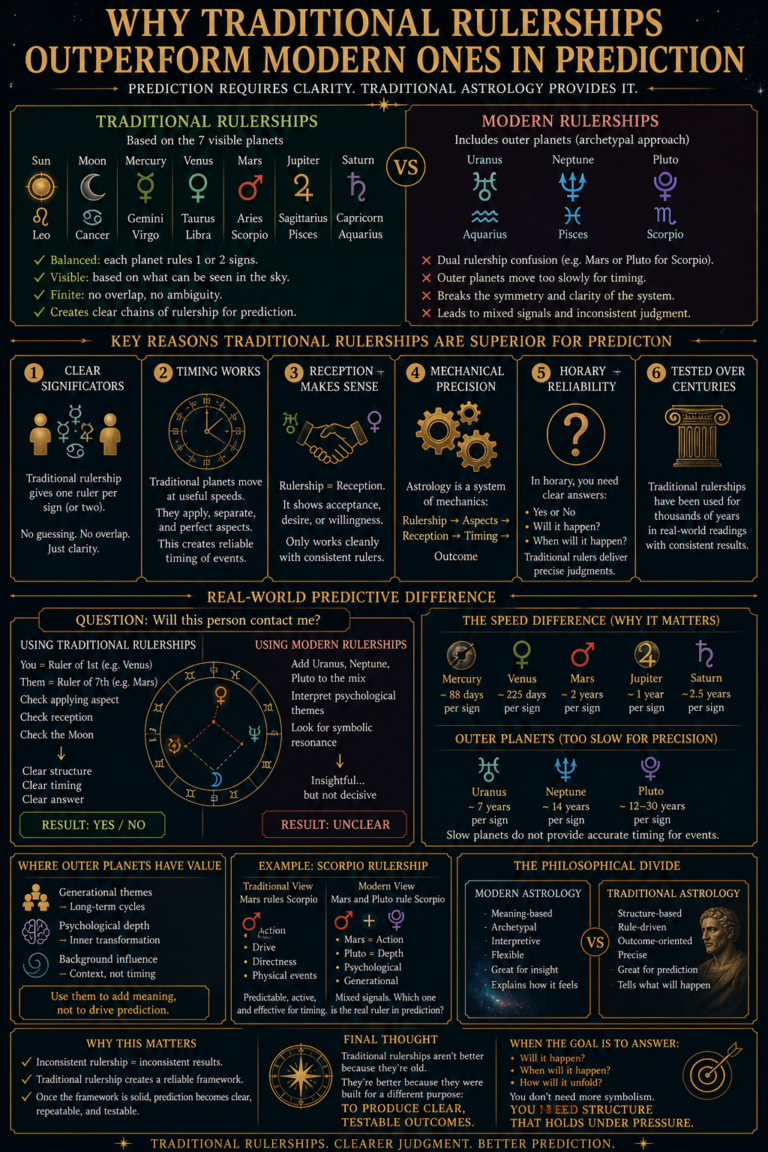
- Interpretations vary
- Techniques differ
- Philosophies conflict
The Problem
Astrology is not one voice—it’s a field of perspectives.
8. “Astrology Is Either 100% True or 100% False”
This binary thinking is one of the biggest obstacles to meaningful discussion.
The Reality
Astrology operates in a gray area:
- Symbolic rather than strictly scientific
- Interpretive rather than purely objective
- Experiential rather than universally provable
The Problem
Extreme positions:
- Blind belief ignores nuance
- Total dismissal ignores historical and psychological value
So What Is Astrology, Really?
A more grounded perspective is this:
Astrology is:
- A symbolic language
- A pattern recognition system
- A tool for reflection
- A framework for understanding cycles
It is not:
- A guaranteed prediction machine
- A replacement for decision-making
- A fixed definition of identity
Why Challenging Astrology Matters
If astrology is to evolve, it must:
- Move beyond stereotypes
- Resist oversimplification
- Encourage critical thinking
- Maintain depth and integrity
Ironically, questioning astrology doesn’t weaken it—it strengthens it.
It separates:
- Surface-level content
from - meaningful insight
Final Thoughts
Astrology’s popularity today is both its greatest strength and its biggest risk. The more accessible it becomes, the more it risks being diluted.
By challenging common misconceptions, we return astrology to what it has always been at its best:
A tool for awareness—not certainty.
A guide—not a rulebook.
A language—not a label.
The stars may suggest—but it is still up to us to decide.