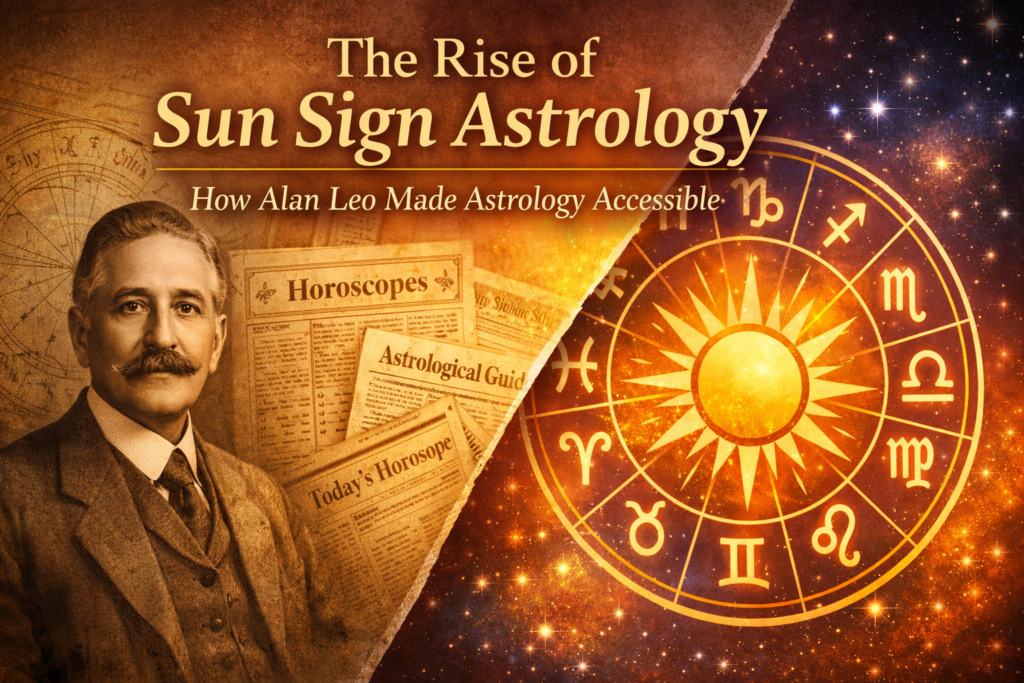
Today, when someone asks, “What’s your sign?”, they are almost always referring to their Sun sign. This simplified form of astrology—based solely on the position of the Sun at birth—has become the most widely recognized entry point into the astrological world.
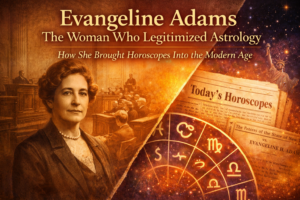
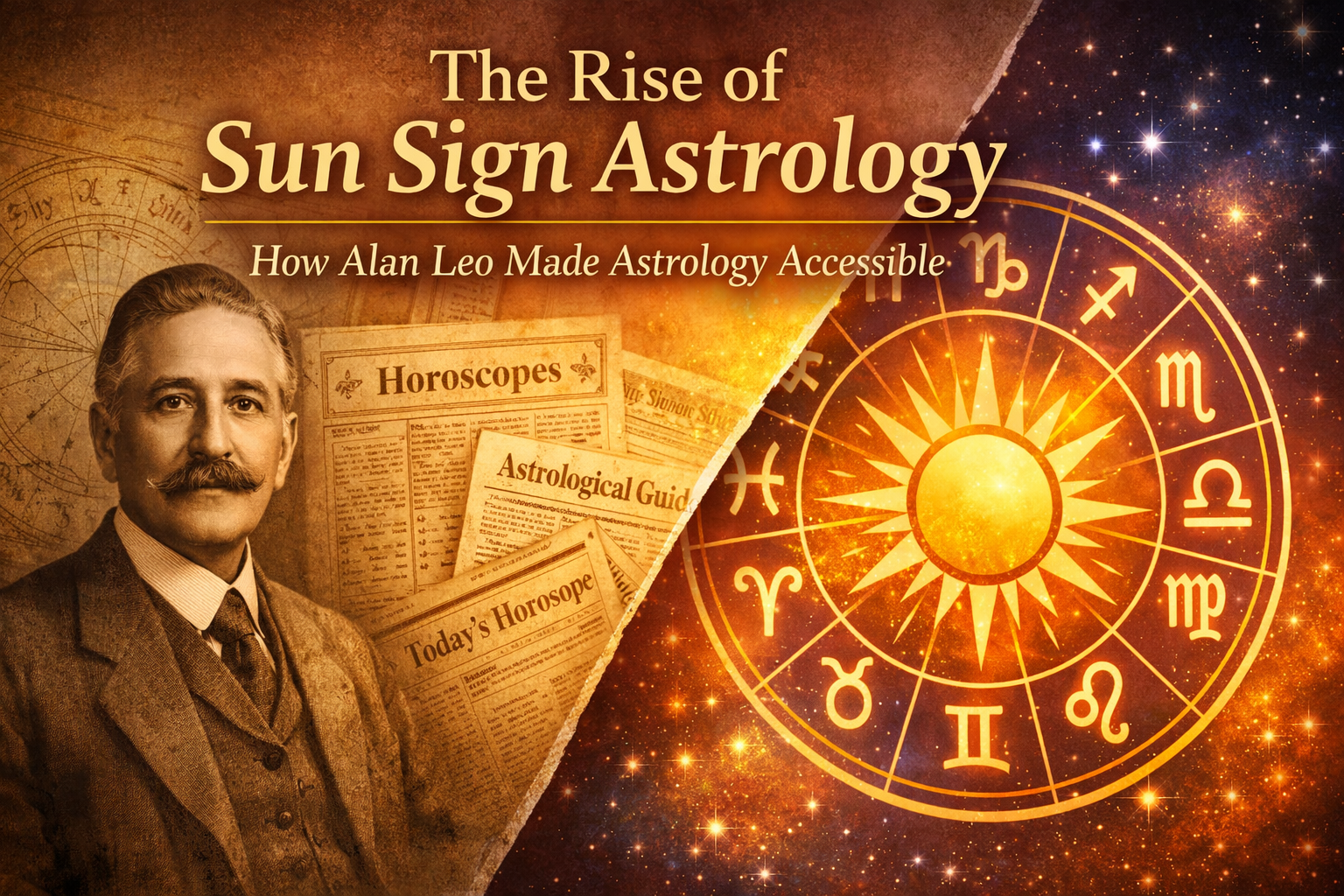
However, astrology was not always this simple. Traditional astrology was complex, mathematical, and deeply nuanced. The popularization of Sun sign astrology can be largely attributed to one influential figure: Alan Leo.
Through his work in the late 19th and early 20th centuries, Alan Leo transformed astrology from a technical discipline into a more accessible and psychologically oriented system—paving the way for the modern astrology we see today.
Astrology Before Sun Signs
Before the rise of Sun sign astrology, the practice was far more intricate. Astrologers relied on full natal charts, which required:
- Exact birth time
- Geographic location
- Complex calculations using ephemerides and tables
- Interpretation of planets, houses, and aspects
Astrology was primarily practiced by scholars, mathematicians, and specialists. It was not easily accessible to the general public.
In short: astrology required effort, knowledge, and time.
Who Was Alan Leo?
Alan Leo is often referred to as the “father of modern astrology.” Born in England during the Victorian era, Leo was instrumental in reshaping astrology’s purpose and accessibility.
His Key Contributions
- Shifted astrology from predictive fortune-telling to psychological insight
- Popularized astrology through books, magazines, and public writings
- Simplified astrological concepts for everyday readers
- Helped astrology survive legal scrutiny by reframing it as self-development rather than prediction
Leo believed astrology should be a tool for personal growth and self-understanding, rather than merely predicting fate.
The Birth of Sun Sign Astrology
One of Leo’s most impactful innovations was emphasizing the importance of the Sun in shaping personality. While the Sun had always been central in astrology, Leo elevated its role as the primary indicator of identity.
Why the Sun?
- The Sun represents the core self, ego, and life force
- It moves predictably through the zodiac, spending about one month in each sign
- It is easy to calculate using just the birth date
This made it possible to determine someone’s Sun sign without needing a full birth chart.
Convenience: The Key to Mass Popularity
The rise of Sun sign astrology was not just philosophical—it was practical.
Why Sun Sign Astrology Took Off
1. No Birth Time Required
Most people do not know their exact birth time. Sun sign astrology eliminates this barrier entirely.
2. Easy to Understand
Instead of interpreting an entire chart, individuals could identify with a single zodiac sign.
3. Perfect for Print Media
Newspapers and magazines could publish daily, weekly, or monthly horoscopes based on Sun signs—reaching a mass audience.
4. Quick and Scalable
Astrology could now be consumed in seconds rather than requiring hours of consultation.
5. Social Simplicity
It became easy to discuss astrology casually:
- “I’m a Leo.”
- “She’s a Scorpio.”
- “We’re compatible.”
This simplicity turned astrology into a cultural phenomenon.
From Occult Science to Popular Culture
Alan Leo’s influence laid the groundwork for astrology’s explosion in mainstream media.
In the 20th century:
- Newspapers began publishing Sun sign horoscopes
- Astrology columns became daily reading habits
- Zodiac signs became part of identity and personality discussions
- Astrology entered entertainment, dating, and social culture
By the mid-1900s, Sun sign astrology had become the dominant form of astrology for the general public.
The Advantages of Sun Sign Astrology
1. Accessibility
Anyone can learn their Sun sign instantly.
2. Entry Point into Astrology
It serves as a gateway to deeper astrological study.
3. Cultural Integration
Sun signs are widely recognized and discussed globally.
4. Simplicity
Easy to understand without prior knowledge.
The Limitations of Sun Sign Astrology
While convenient, Sun sign astrology is only a small piece of the full astrological picture.
1. Oversimplification
A full natal chart includes:
- Moon (emotions)
- Rising sign (personality expression)
- Planets (behavioral drives)
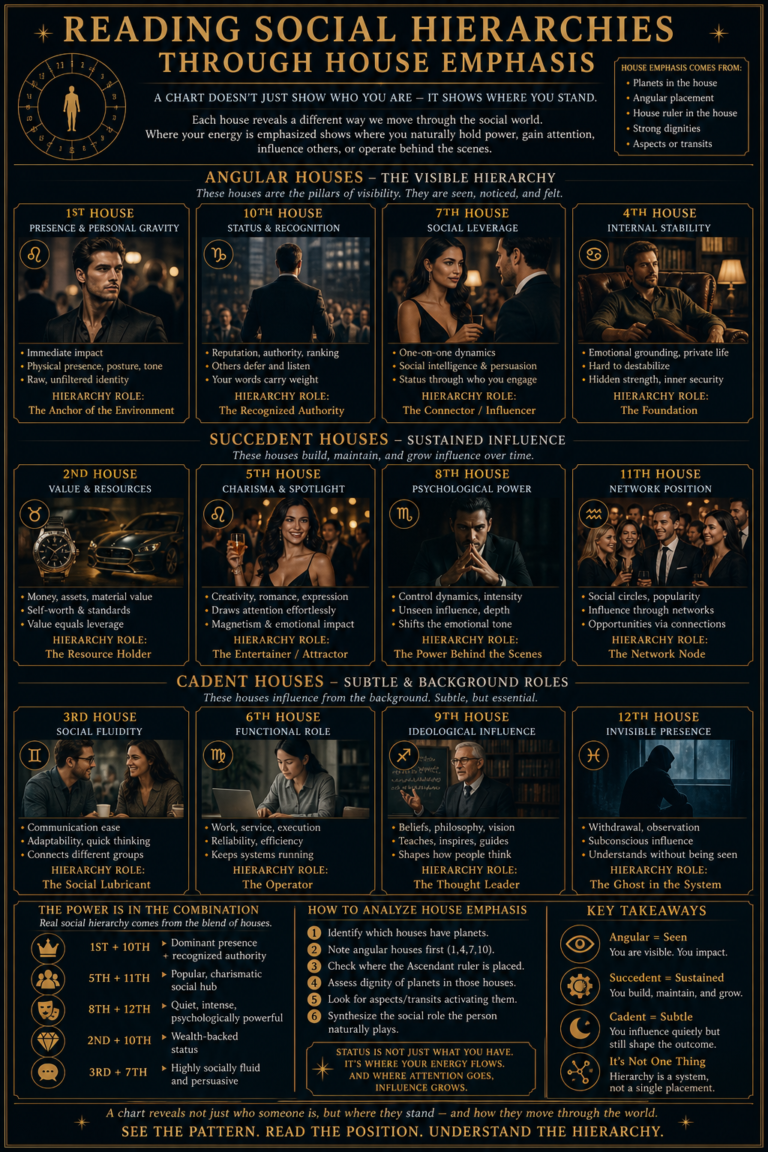
- Houses (life areas)
The Sun sign alone cannot capture this complexity.
2. Reduced Accuracy
Two people with the same Sun sign can be vastly different due to other chart factors.
3. Generalized Predictions
Sun sign horoscopes are broad and not personalized.
4. Misrepresentation of Astrology
Some critics dismiss astrology because they only encounter its simplified form.
Alan Leo’s Lasting Impact
Despite its limitations, Alan Leo’s contribution to astrology cannot be overstated.
He:
- Preserved astrology during a time of skepticism
- Made it accessible to millions
- Shifted its focus toward psychology and self-awareness
- Created a foundation for modern astrology’s resurgence
Without Leo’s innovations, astrology might have remained an obscure and highly specialized discipline.
Sun Signs as a Gateway, Not the Destination
A more balanced perspective is to view Sun sign astrology as an introduction, not the full system.
It answers:
- “What is your core identity?”
But deeper astrology explores:
- How you feel (Moon)
- How you present yourself (Ascendant)
- How you act, think, and love (planets and aspects)
- Your life path and timing (predictive techniques)
Final Thoughts
The popularity of Sun sign astrology is a testament to the power of simplicity and accessibility. Through the work of Alan Leo, astrology evolved from a complex, scholarly practice into a widely embraced cultural language.
Convenience made astrology approachable—but depth keeps it meaningful.
In many ways:
- Sun sign astrology opened the door
- The full birth chart reveals the house
As astrology continues to evolve—especially in the age of AI and digital tools—its challenge remains the same: balancing accessibility with depth, and simplicity with truth.